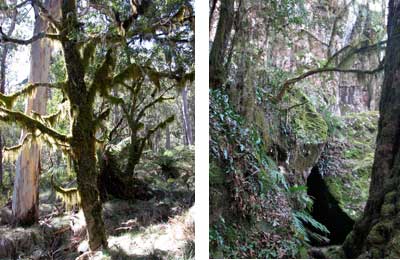
On the way in to the New England National Park I began passing snow gums and trees so hoary with mosses and lichens that I couldn’t say what they were underneath.
At over 1500m above sea level, this park has spectacular views looking out but also looking in.
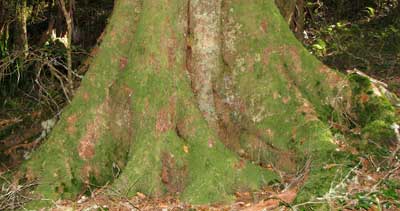
Gondwanaland plants like Antarctic Beech and tree ferns make some of the walks here as eerie and green as a trip into the land of Lord of the Rings.
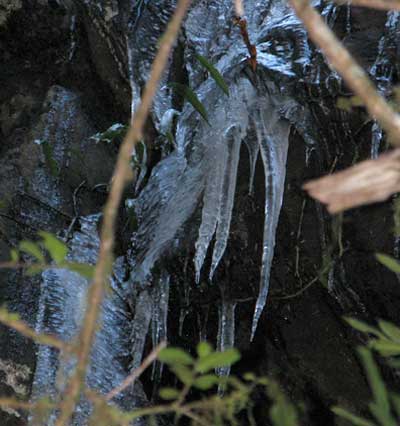
Treading gingerly over damp tracks and beween giant mossy rocks on the side of the escarpment brought me to the Weeping Rock – whose tears were frozen mid-fall.
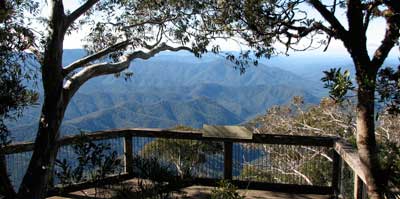
And thence to Point Lookout itself, where I wasn’t game – yet again– to venture on to the cantilevered viewing platform.
By the time I got to the Wollomombi Falls, the highest in Australia, the sun had sunk too low to get a good photo of these rugged and quite scary falls. You’ll have to go there yourself!
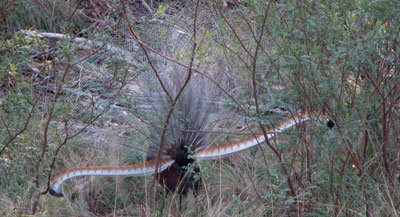
But I walked a little and heard so many bird calls, one after the other, that I knew a lyrebird was about. And then I saw him! In a small copse of shrubs, singing through his wide repertoire of mimickings, and displaying his beautiful tail. What a treat!
Aren’t national parks great?
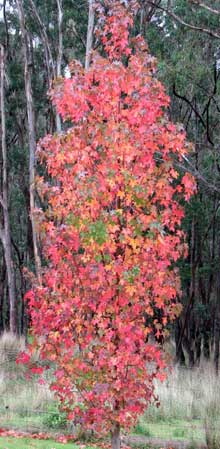 As Autumn becomes Winter, under perpetual grey skies, the intermittent thin drizzle keeps the saturated ground weeping down the hillside.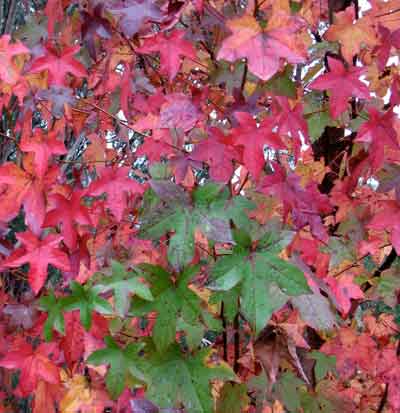
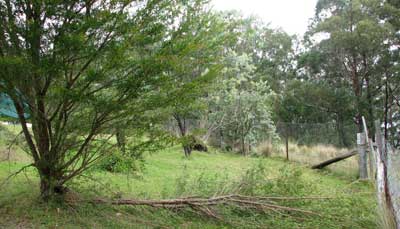
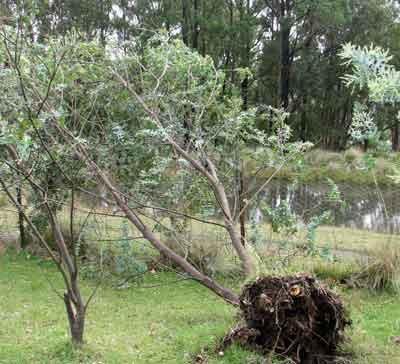
 As you might expect, given that I live in forest country, I love trees.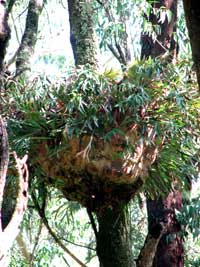
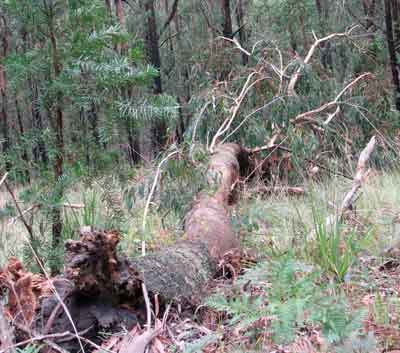
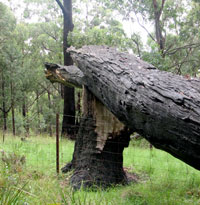 Even when a tree is totally destroyed, its trunk broken off and laid low, taken from skydweller to ground hugger, it takes on new life as host. Like this mighty ancient, which blocked the track for some time until a big enough chainsaw came along.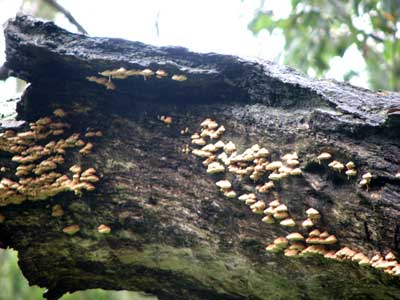
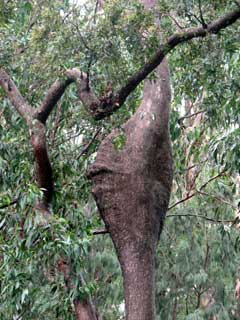 When walking along the forest tracks, I am usually so busy keeping my eyes directed downwards for snakes—and currently for the rare dry strips between the puddles—that I don’t often look up to the treetops.