Well, I am finally fully moved to my new home, albeit with too many things to fit into a much smaller place. The local op shops have received a great deal of the overflow.
I had not had time to check out my nearby walks, which will often be on the coast.
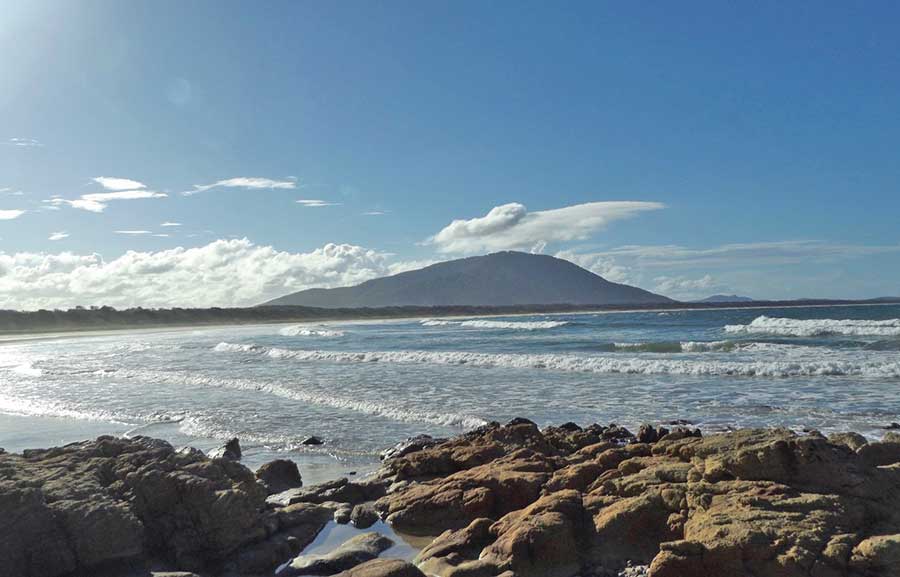
Of course I was first drawn to the closest thing to a mountain: Nobby Head. I read it is only 30 metres high, but it will have to do.
Being an early riser, I hurried up the hill to catch the sunrise, always a miracle.
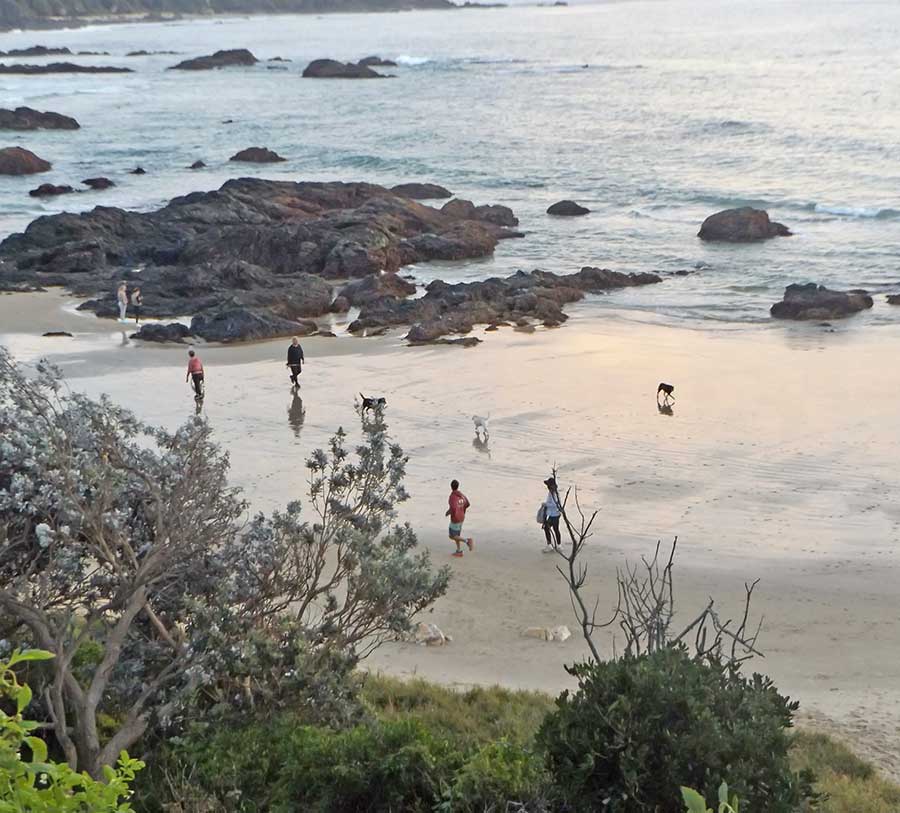
It wasn’t even 7am, but clearly the dog owners here are earlier risers than I am. The small Nobbys Beach where I had imagined walking was criss-crossed with paw and people prints. There were people busily walking down to it, along it and up from it. Before work, I suppose.
Some had more than one dog.
So the dog beach won’t be my beach.
And I was made aware that Port Macquarie is a much more citified town, as very few folk responded to my ‘Morning’ or my smile.
I climbed up my ‘mountain’, despite a wet and slippery track, much eroded. There is no view from the top, and it does not feel like a mountain, even a miniature one.
I saw other indications of too many people and too little respect for history or nature. The monument at the top was covered in graffiti. It was meant to commemorate Henry Gardiner, who had died in 1874 trying to save a friend’s life in the sea just below here. Both perished.
Where was the respect for them?
The vegetation still held natives like the lilli-pilli I could see, but under so much of the invasive asparagus fern that it was almost buried.
It was all rather sad. I’ll be leaving this beach to the dogs and their dutiful owners. The mandatory and multitudinous pairings struck me as quite odd; what would an alien think of this society?
But I have found somewhere else nearby to explore… and to introduce you to next post.
After three great years here in my ‘Treehouse’ beside the paperbarks, I have to downsize, spacewise and financially. The extra rooms here and the several car spaces are wasted on me.
I fell in love with here at once, so close to nature as it is, with such great views of the bush, the river and the mountain and with so many lovely bushwalks nearby.
As I have already borrowed to buy a smaller place elsewhere, I am very anxious to sell here as soon as possible. Please take a look and pass on the agent’s link to anyone who may be interested. Click on the photo to see the full listing.
It’s difficult not to be distracted by the wildlife here, even if I don’t leave my desk. At this second floor height what’s going on amongst the trees is ‘in your face’, so to speak.
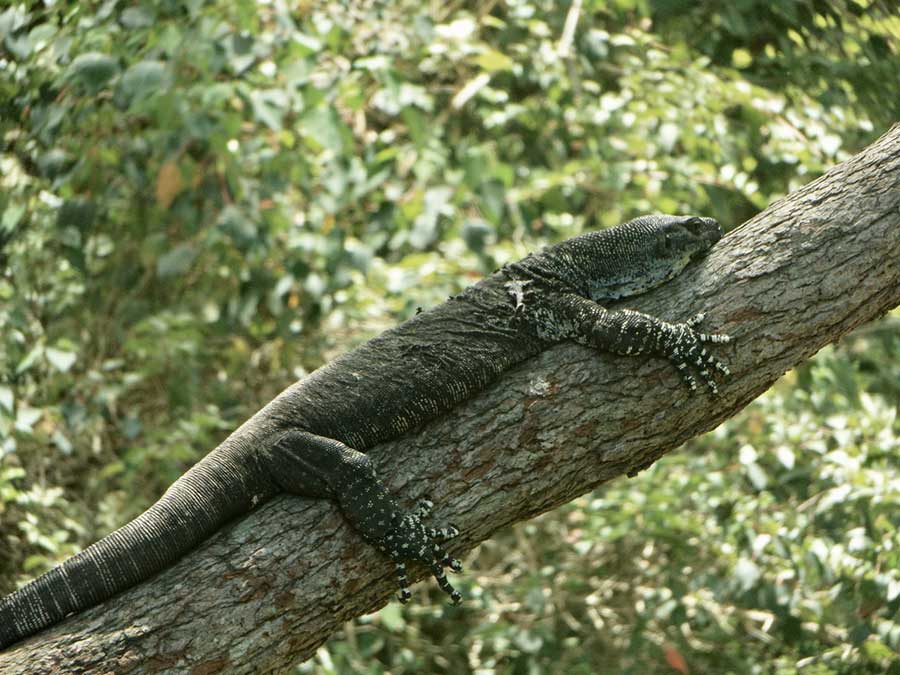
Like this goanna, who decided to climb up and laze on this branch for about a half hour; not after any nest of baby peewees, just hanging there. When done, it turned around – always a heart-stopping manouevre to watch — and slowly gripped its way down, its tail almost overtaking it.
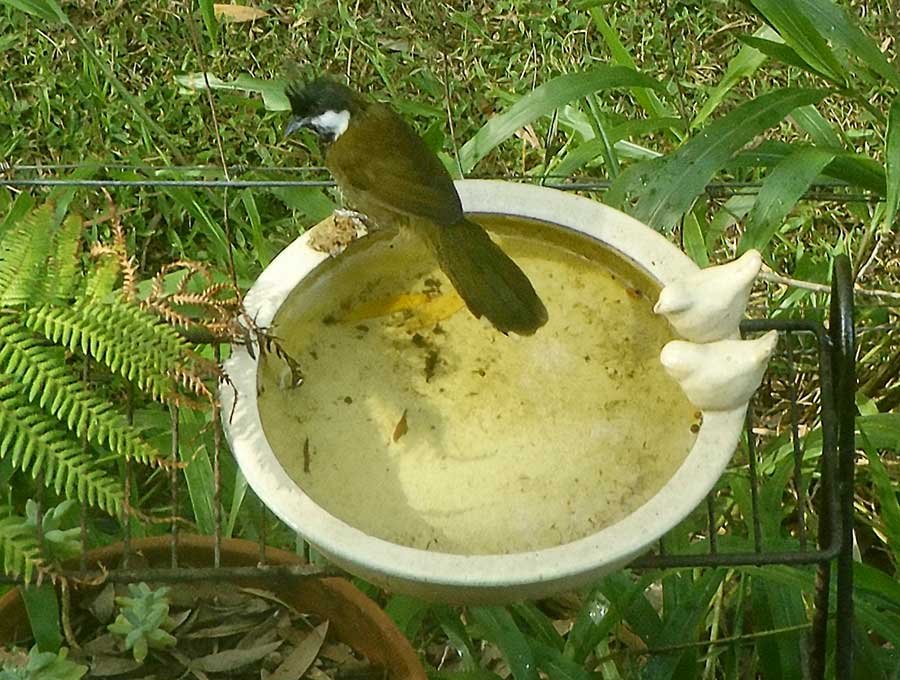
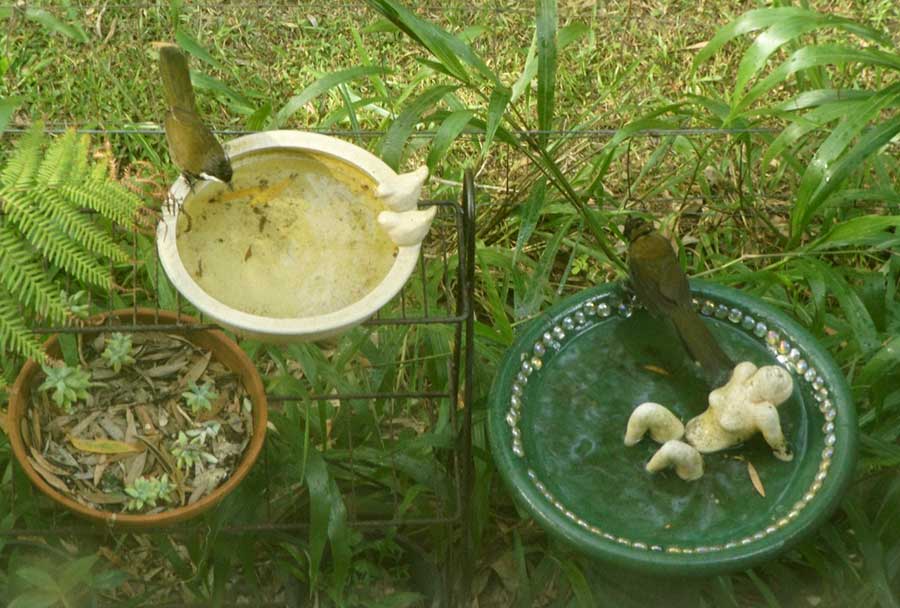
Odd noises often alert me to activity closer to the ground, as in the various birdbaths. This time it was a repetitive soft bird call, and when I checked, there were two birds I had not seen here. Eastern Whipbirds, I learn, and I had certainly heard the males’ whip crack before.
The female’s call is described as ‘choo-choo’, with which I probably wouldn’t agree, but if they visit again I will listen more closely and come up with a more fitting one. Another book says ‘chuckles and whistles’ — quite an art, summing up bird talk…
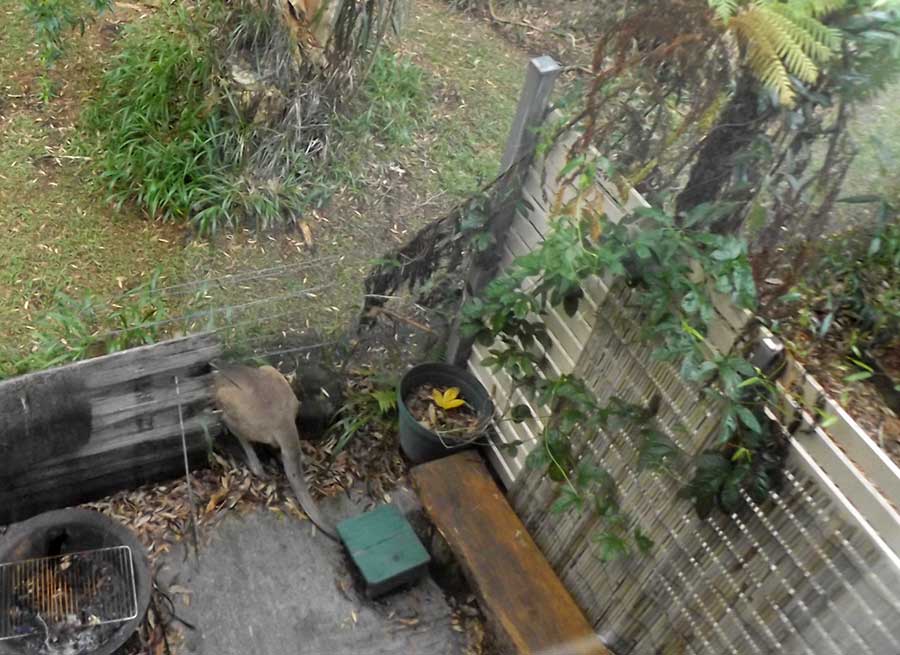
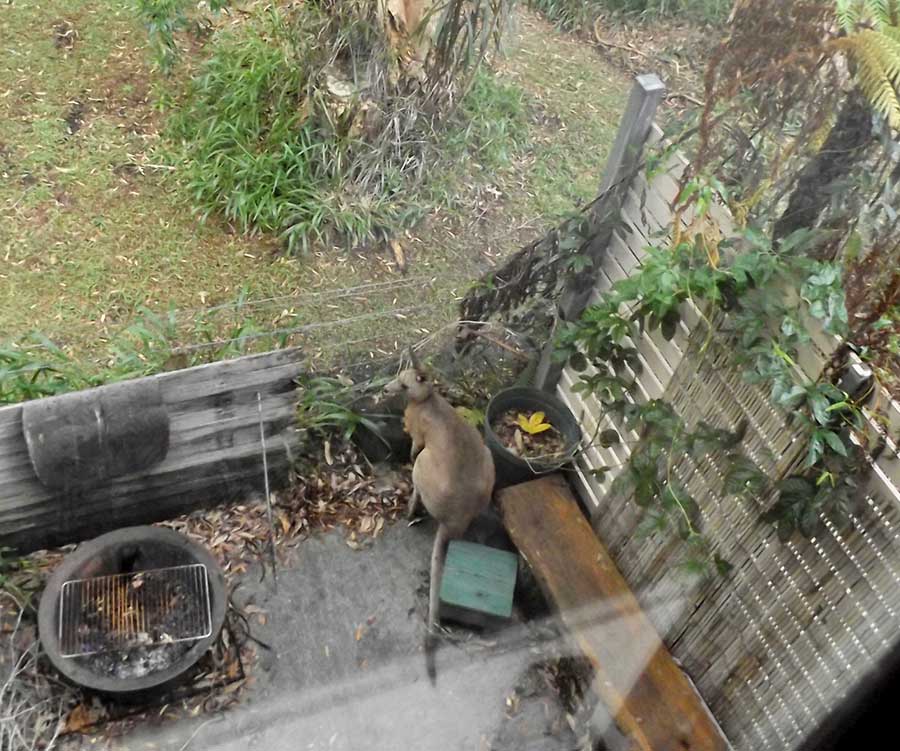
A louder racket made me stand and look down into my small back yard where an Eastern Grey Kangaroo had pushed its way in beside the pigwire fence and was trying to return — but clearly couldn’t find or use the same route.
I was worried about him panicking as he pushed fruitlessly at the fence, but he was no fool. Having realised that no part of his body beyond his head would go through the wire squares, he quickly checked out the rest of the yard, then took a running jump and went over the fence.
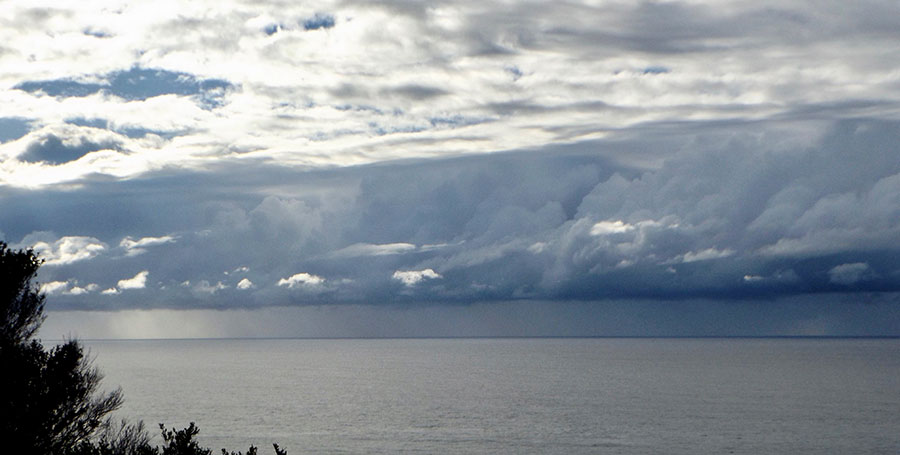
With distant snow-capped Alps in my mind’s memory, I have just revisited a few of my most often visited local nature spots.
I found no Alps, but mythical cloud mountains over a pewter sea. The ephemeral will have to do.
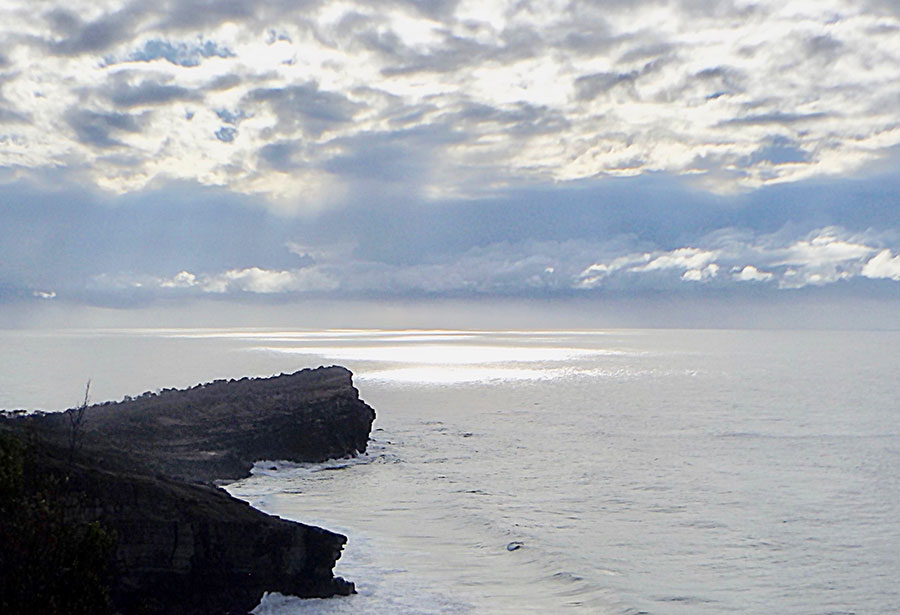
Sun-splashed, that sea butts as restlessly as ever against the rugged cliffs that guard the Camden Haven.
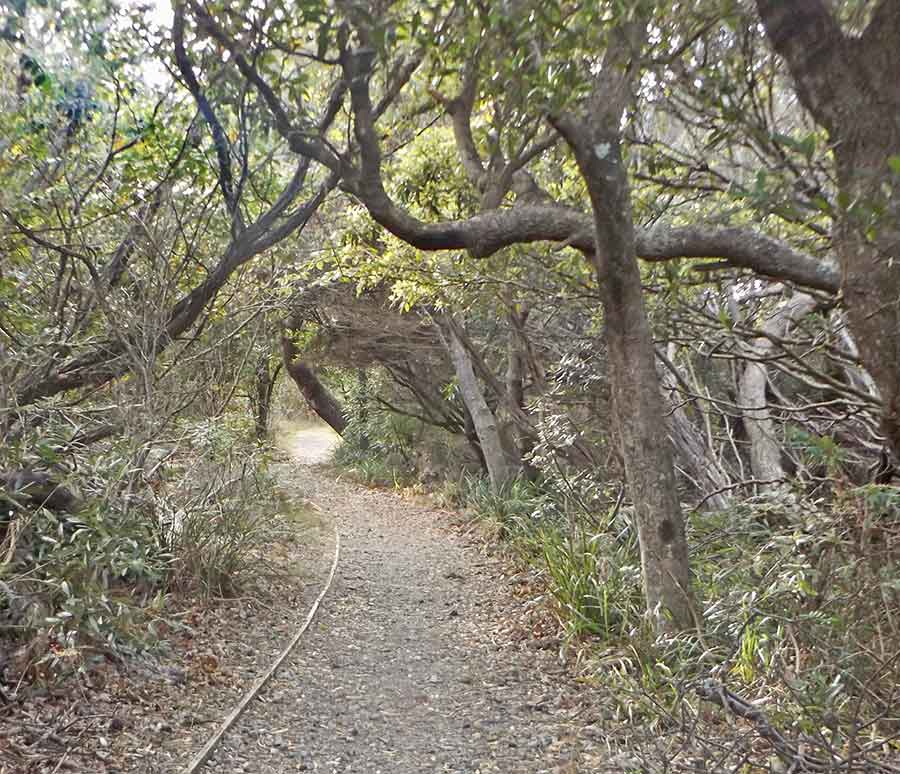
The bush above the cliffs is equally buffeted by the sea winds, so grow low, and bend to survive. It is nothing like the bright verdant forests of Northern Italy, but I have been thirsting for this greyish-brownish-green, quite ‘verde’ enough for me. After all, as Kermit almost said, ‘it’s not simple being green’.
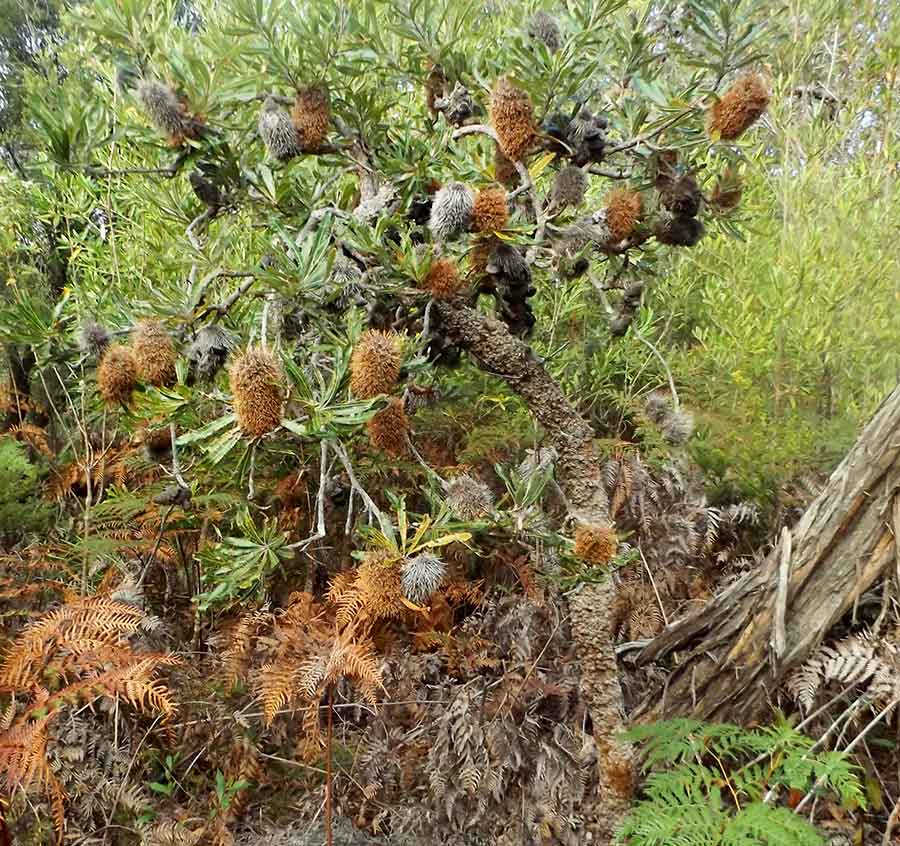
I marvel anew at the uniquely grotesque beauty and bounty of the banksia trees.
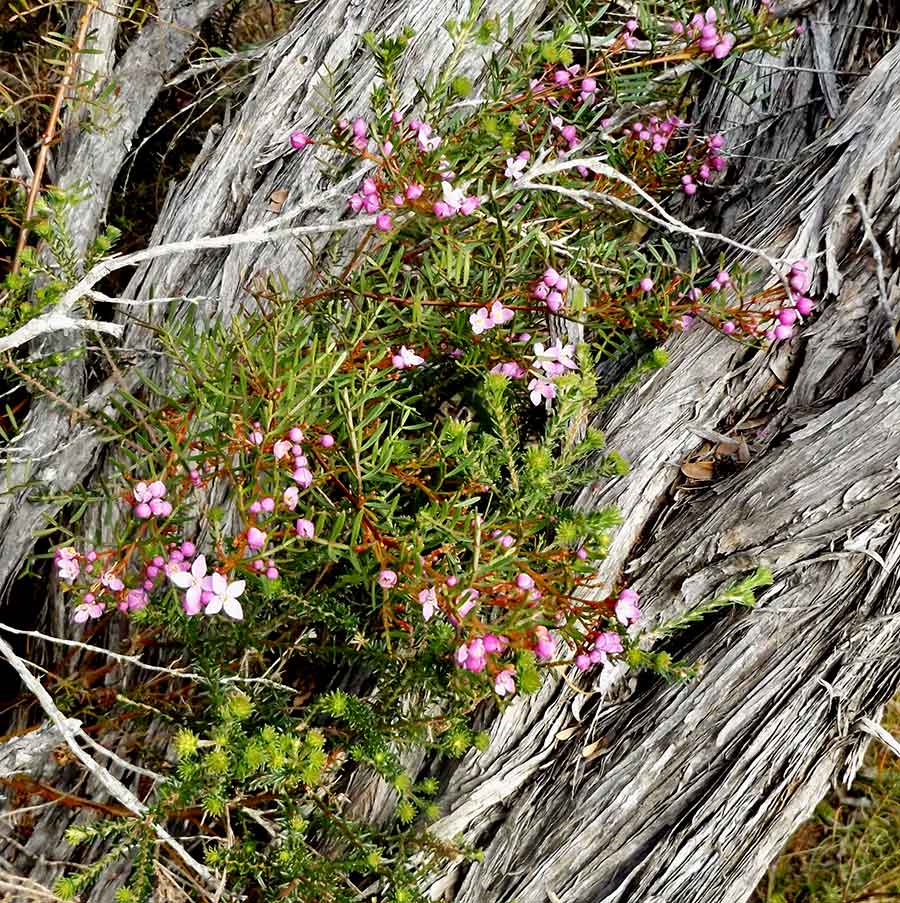
Being almost Spring, there are many small patches of colour already amongst the greys of the fallen trees. Flowers like the pink Boronia, many yellows, whites like the perfumed Pittosporum, the bright lime winged seed cases of Dodonea, or the striking berries of the Blueberry Ash.
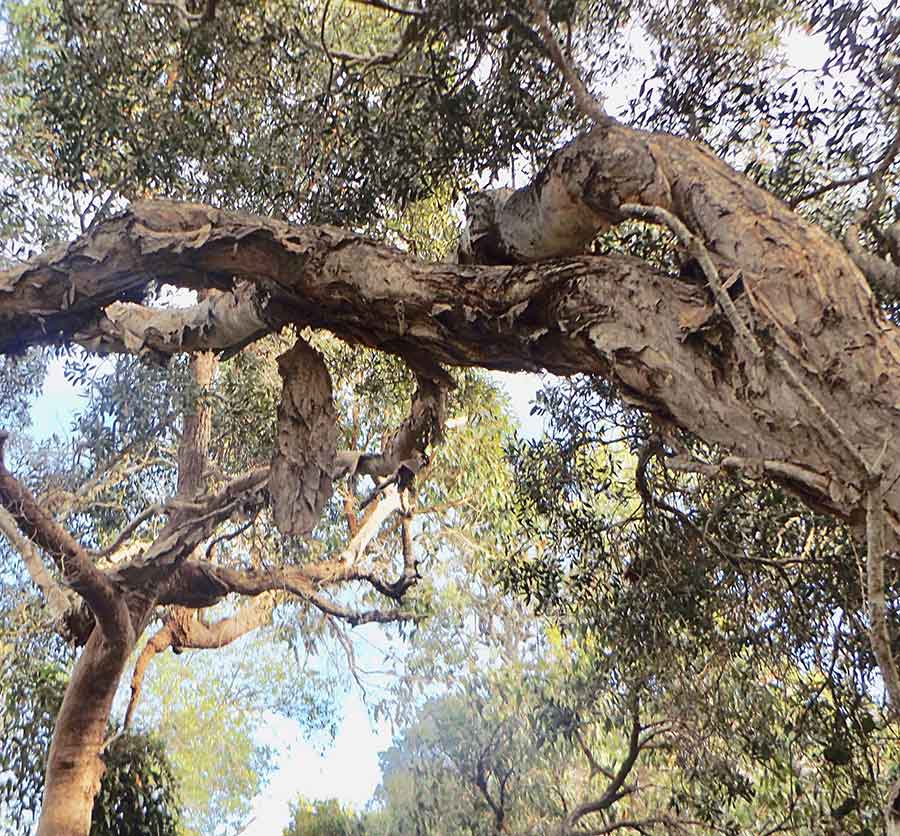
In one dry but sheltered swamp this big paperbark tree had a large section of bark hanging by a thread, spinning in the breeze like a top, or a banner saying, ‘Look at me’!
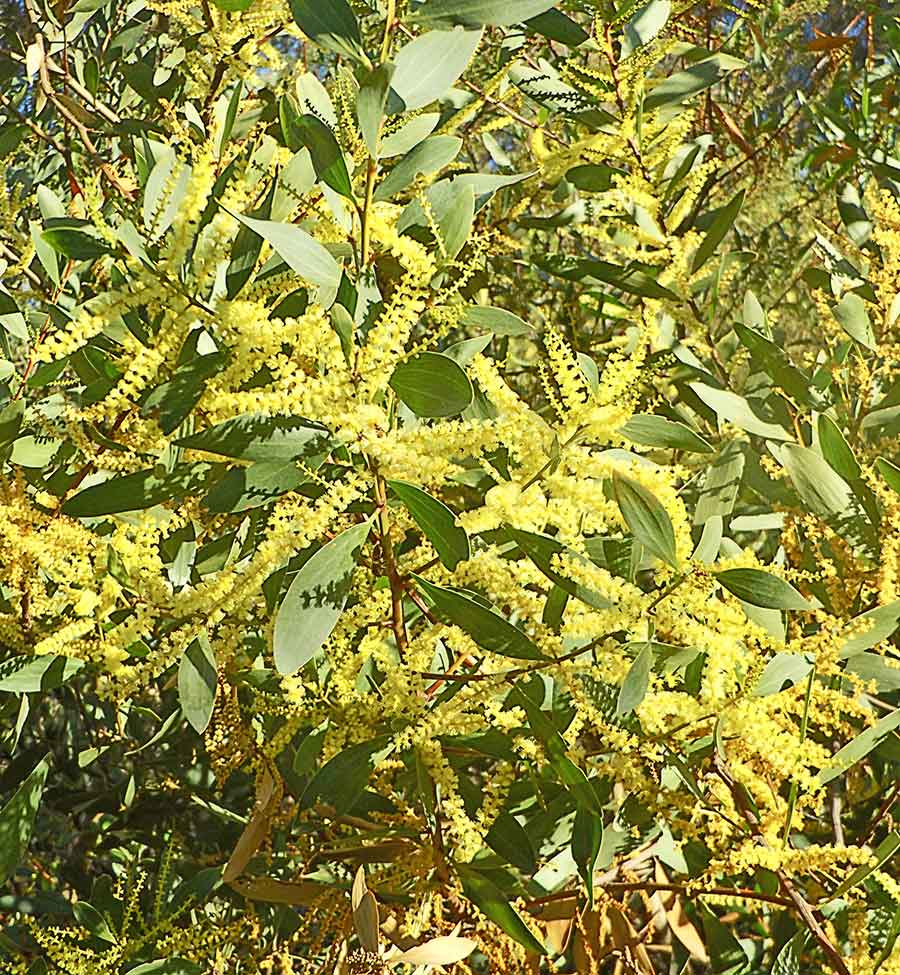
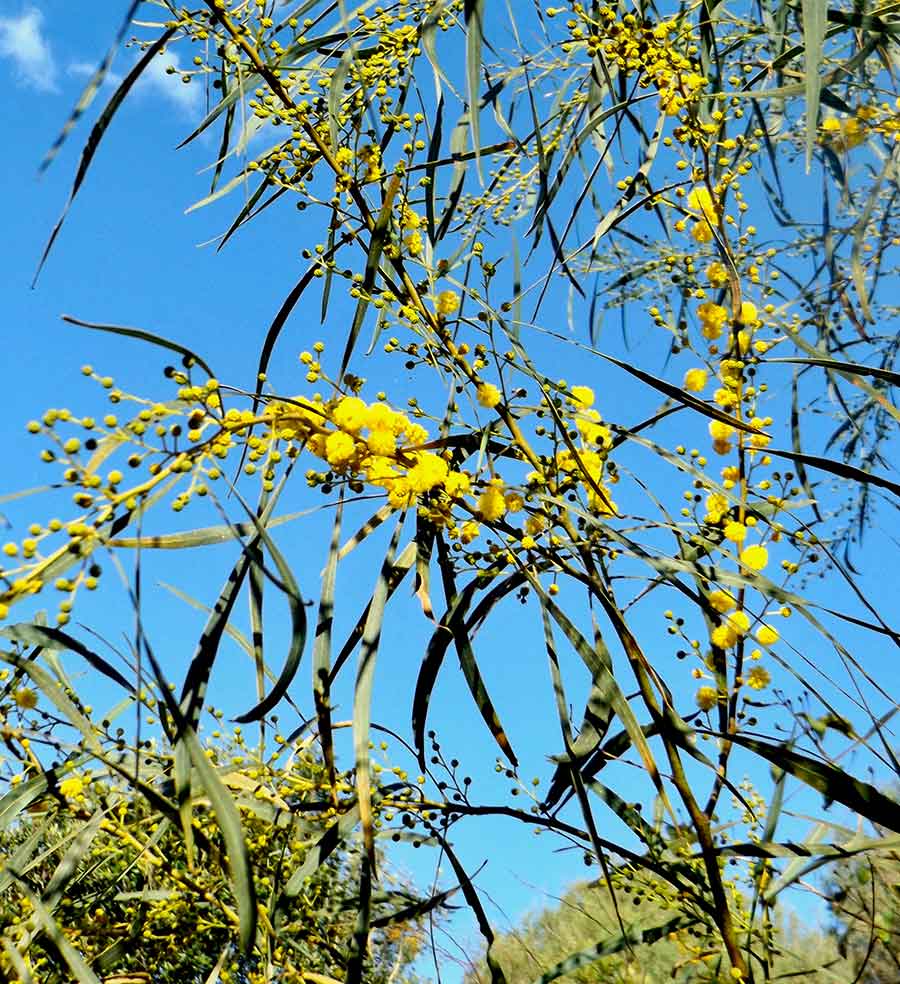
Of course there were wattles to greet me, as there were on my other favourite walk, to the beach near me, where two sorts thrive.
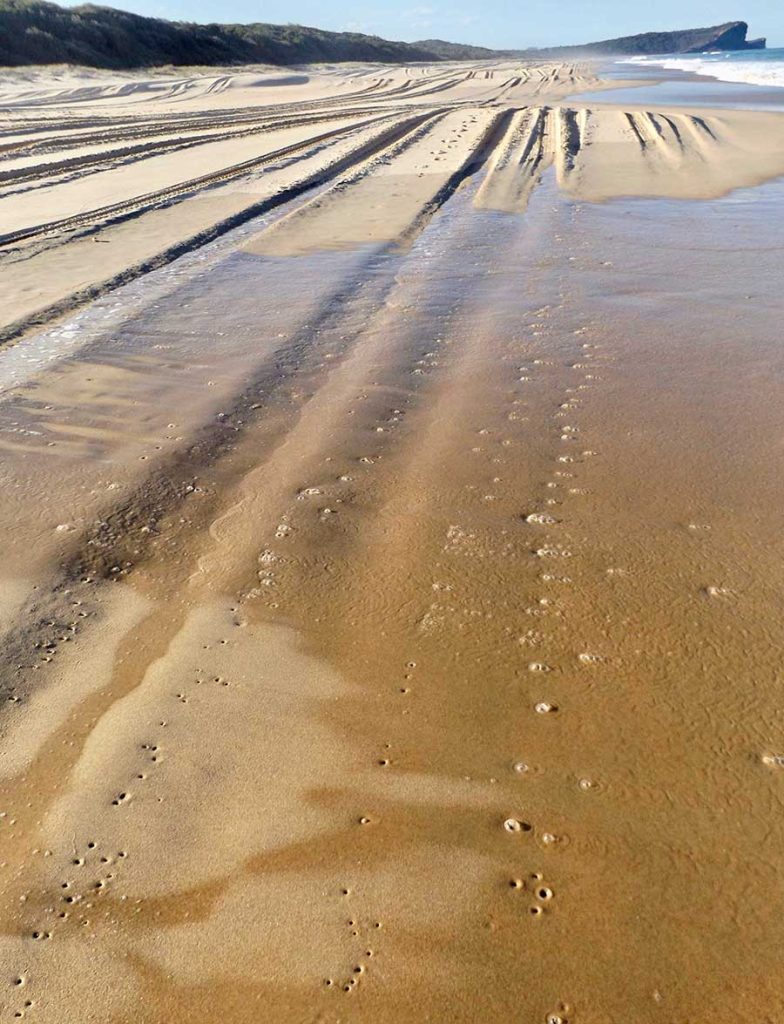
The beach itself was disappointingly but familiarly abused, scored by dozens of 4WD tyre tracks. I watched the air bubbles after each wave receded, and wondered what small creatures were taking refuge beneath the sand. No tiny ghost crab would be game to stick its head up here…
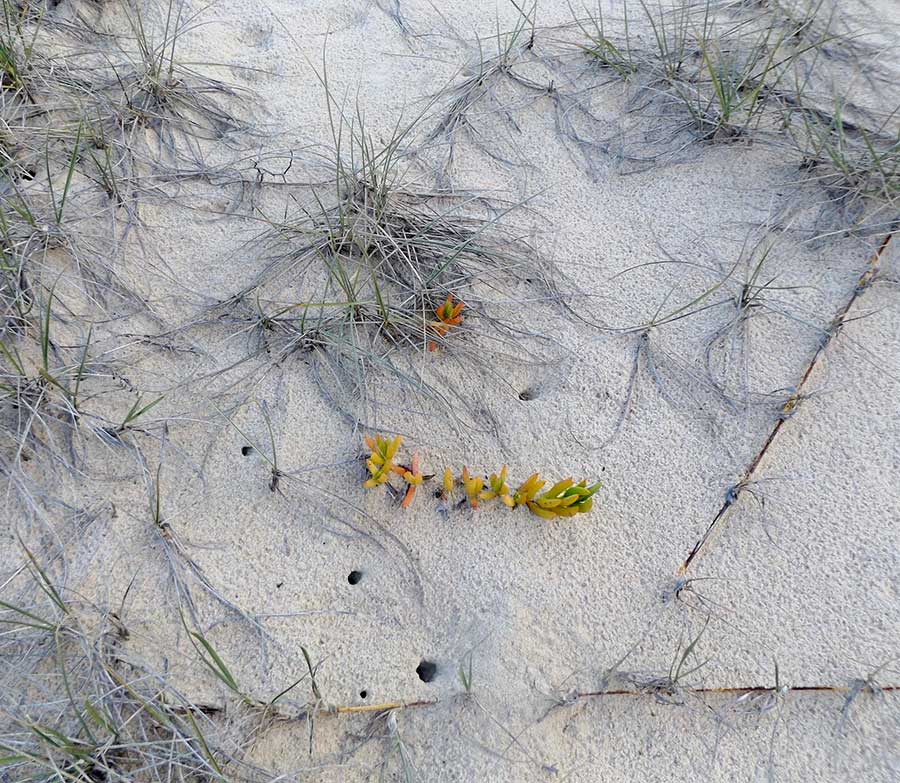
On the dry higher sand where grass is holding it all together, there were fewer tracks — although there should be none — and just an occasional spot of colour like this succulent, where another plant struggled to get going.
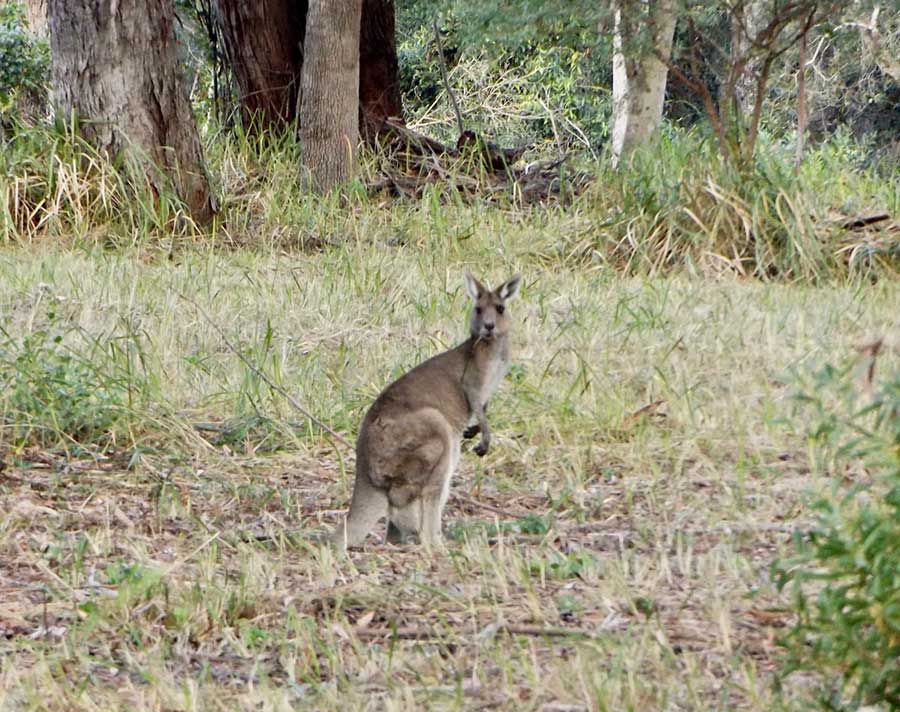
As I walked back, I felt truly home when this lone kangaroo stopped to watch me.
Having been fortunate enough to have gone camping lately, I have been once more cooking on an open wood fire… and loving it.
It took me back to the first year on the Mountain, when we lived in a tent. Being in a forest, there was limitless wood for fires.
Four rocks and an old fridge rack did excellent duty as my stove, as I cooked our food in cast iron pans, and occasionally used a cast iron camp oven for baking.
It also heated the water, in billies made from pineapple juice tins, for our wind-down canvas bag showers. More simple luxuries.
A card table, with its upper legs dug into the ground in an attempt at a level tabletop on a slope, was my preparation area and our dining table.
Of course I was more agile 40 years or so ago. Not sure I’d be so happy now with the squattng and bending needed for this kitchen.
This drawing was done for The Woman on the Mountain, but we didn’t end up including drawings in the book, so it’s nice to revisit them… and to share them.
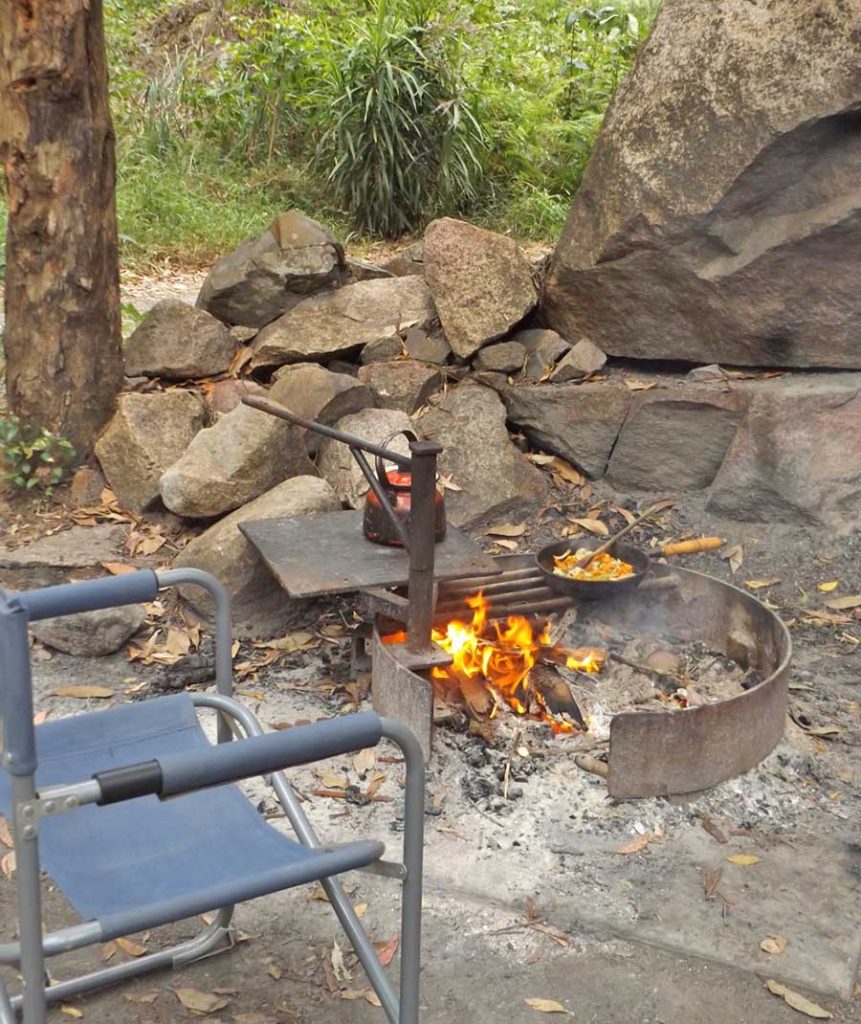
This more sophisticated Forestry model of fireplace that I used recently has a swivelling hotplate as well as a grill. I am still a fan of cast iron, and my blackened enamel kettle is meant for this!
And the smell of woodsmoke came back with me, in my hair and clothes, so I could savour the memories.
I have finally been sorting through the saved flood-damaged files and photos, not without much regret and a few tears, throwing out many, reviving some and surmising what must have been deemed beyond hope and tossed by my helpers in the flood aftermath.
My daughter had dried these curling and stuck-together remnants; I just have not been able to face them.
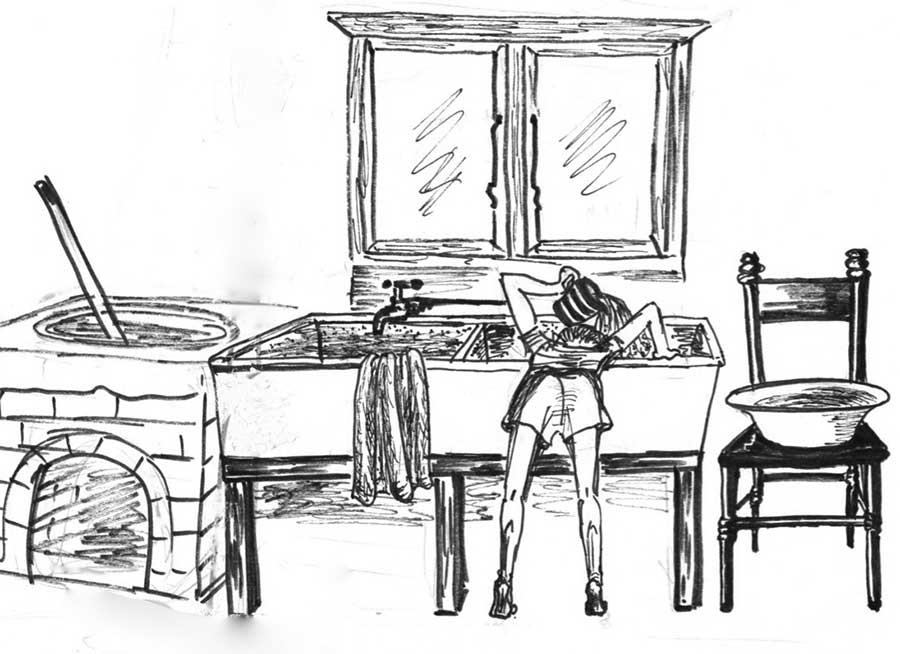
I came across this drawing, intended for what I can’t recall, but it did set me reminiscing on just how primitive were the bathing facilities … and the leaky tank water supply… with which I grew up.
No shower, a once-a-week bath in inches of water, daily face and hands washing in a basin on a chair, which was then set on the floor for feet washing while one sat on the chair. And we did not get a bath or a basinful each, but shared it: Mum first, then down through the sisters, with Dad last.
The once-a-week hair washing was done over the cement laundry tubs, with a jug of warm water for rinsing. For years I was too short to do this comfortably, as the drawing shows!
The wood-fired copper heated the water for Mum’s washing, with a water-furred stick for stirring the clothes and for lifting them out to the adjacent tubs for rinsing.
Mum did have a small cloth bag of Bluo for special whites and a slab of rough sandsoap for Dad’s really dirty work clothes.
But overall one soap did all this, plus being grated into the wire mesh soap holder for dishwashing: a plain yellow bar of Sunlight, the sort that would now be considered only fit for the laundry.
The dishwashing was done in another dish, on the kitchen table, with a metal tray beside it for the brief draining of dishes before our tea towels seized them. There was no hot water on tap in kitchen, bathroom or laundry. The kettle on the fuel stove heated the washing-up water, while a ferocious and highly unpredictable chip heater loomed at the end of the claw-footed bath for the daring to light.
How did we survive without the hundreds of options in personal soaps, bodywashes, shampoos, conditioners, water softeners, pre-washes, stain removers, laundry powders or liquids?
How did my mother?!!
I can still recall the wonder of my first shower, elsewhere, as a late teenager.
So my years of outdoor bush showers and washing at the kitchen sink at the Mountain were not hard; they were luxuries!
Lovely weather for ducks, as they say! Enough to keep me indoors even if my radiation burnt face didn’t.
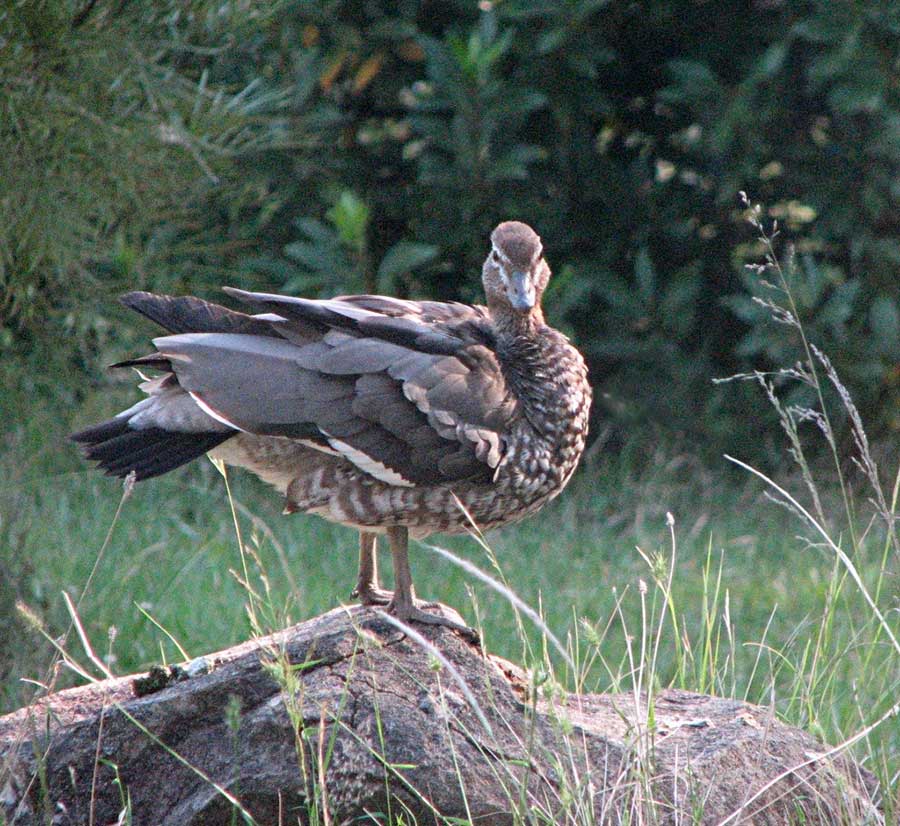
A Maned Wood Duck couple patrol the grounds here, but they are wary, hard to catch with my camera, even if I was to be quick enough to nip out in between cloudbursts. Sudden dumps of wind-driven rain interspersed with sparkling sunshine seem to be the current pattern.
The photo is of the female, but they are both handsome. The ducks reminded me of the piece about them in ‘Mountain Tails’, so here’s the sketch of the couple and a short extract:
‘…through the reeds I spotted a pair of Wood Ducks. I crept towards them, and got closer than usual, but they sensed me coming and waddled off into the mist. Keeping their heads averted as if I didn’t exist, they were muttering to each other at the disturbance. I’ve noticed that they rarely do look at me.
‘This shy and very elegant native duck is my most consistently resident waterbird.
‘The male has little patterning on his pearl-grey body, and a chestnut-brown head, with a black strip, a feathery mane, at the back of his head. His folded wings create bold dark stripes down his back. While he gets the smart tuxedo treatment, she has a more delicate feminine patterning. She’s a softly spotted greyish-brown, with white stripes across her brown head; since her mane is also brown, it’s only noticeable in profile, as an odd shape. Hence they are sometimes called Maned Wood Ducks. Until they are grown up, the young ones of both sexes look like their mum.
‘Occasionally the couple fly over to the small dam below my house yard, but they hardly get to land on the surface, trailing arrows of ripples behind them, before the bossy magpies hassle them to leave. After a lot of protesting squawks on their part and insistent cries from the maggies, the pair take wing, back over the treetops to where they belong. No outsiders allowed in the magpies’ local pool. They will allow the ducks to fossick amongst the tussocks around the dam wall for a time, but not to go in.’
Confined as I am to my place, unable to see what is flowering in the bush, it is a great treat to have Spring come to me.
Some of these plants are having their first Spring as residents, so I am glad to see them not only survive their potted lives, but burst into bloom!
This is a native, Philoteca myoporoides, flowering above the Bacopa ground cover.
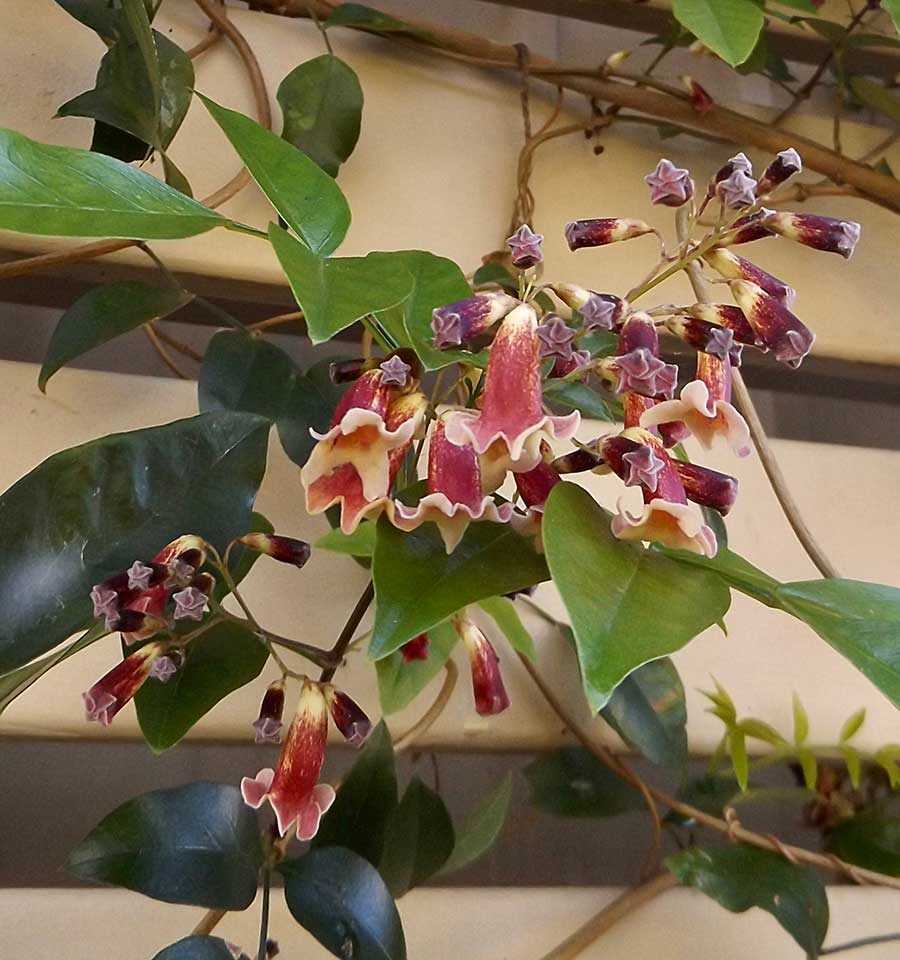
Planted at the same time last year, this Ruby Belle variant on the native climber, Pandorea pandorana, quickly climbed right up the lattice to the top floor and has proved really too vigorous for comfortable control, but it is pretty foliage anyway, so I won’t be pulling it out. These are the first flowers I have had on it.
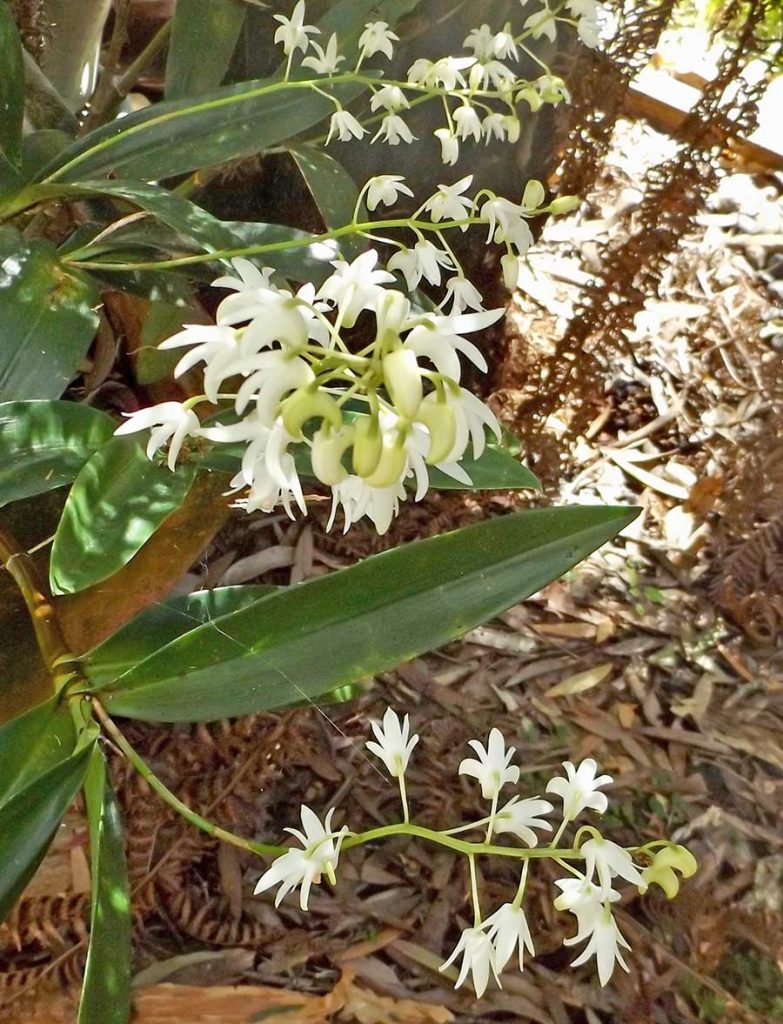
In the back garden strip, inherited pots of orchids were put to shelter under a tree fern. Their current starry flowers are a surprise gift!
Not a flower, but green at least, and a symbol of why I am not out bushwalking. My personal mask has been my daily companion/jailor during my month’s radiation treatment, and I now have it at home.
I am told some people grow strawberries in theirs! But I will keep it as a sculptural memento of the time: of fighting down panic as it is placed over your face and clamped down firmly to the table beneath you.
I know it is so the radiation is targeting precisely the right spots on my nose/face each time, and I appreciate that.
But as your nostrils are plugged with wet cotton wool, you must breathe through your mouth. And stay calm…
The team at Port Macquarie Cancer Unit are great and do their very best to help, but it is a fact that radiation burns the good cells as well as the cancerous ones, so my burnt face must now undergo about 10 days of escalating side effects before it can begin to heal.
I only hope it has done the intended job, as that cannot be determined.
But the lesson I learnt there was that, as my Dad used to say, ‘There are always others worse off then you, Sha!’.
Many of the plants in my low garden, in ground or in pots, are turning up their toes at the seemingly endless rain, like this lavender.
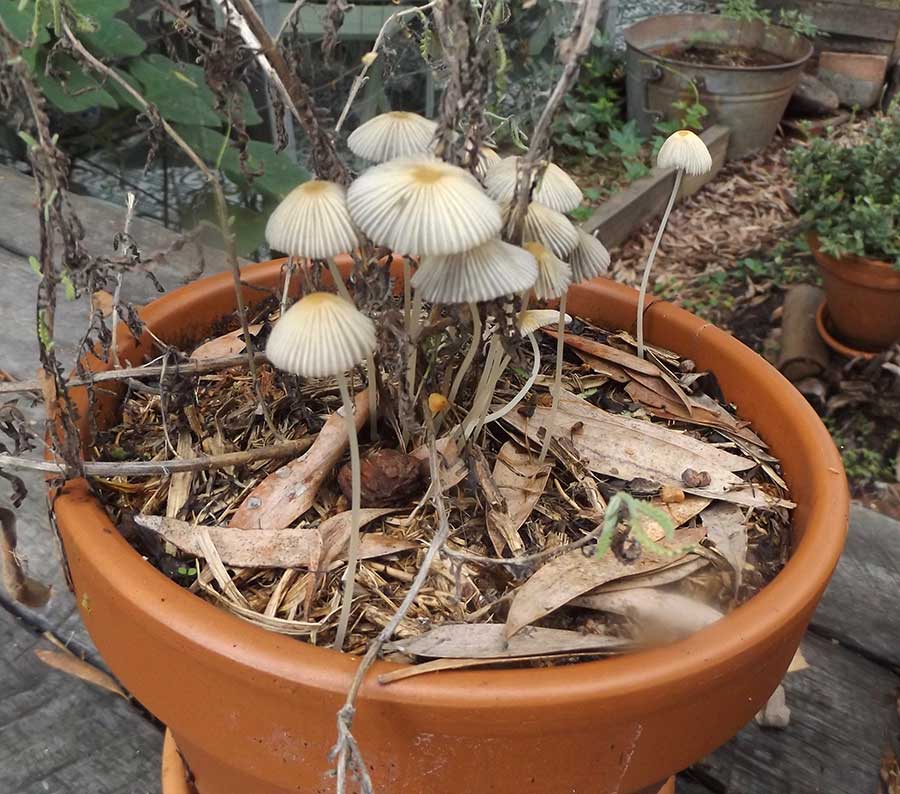
Yet other things, like these fungi, can take advantage of it.
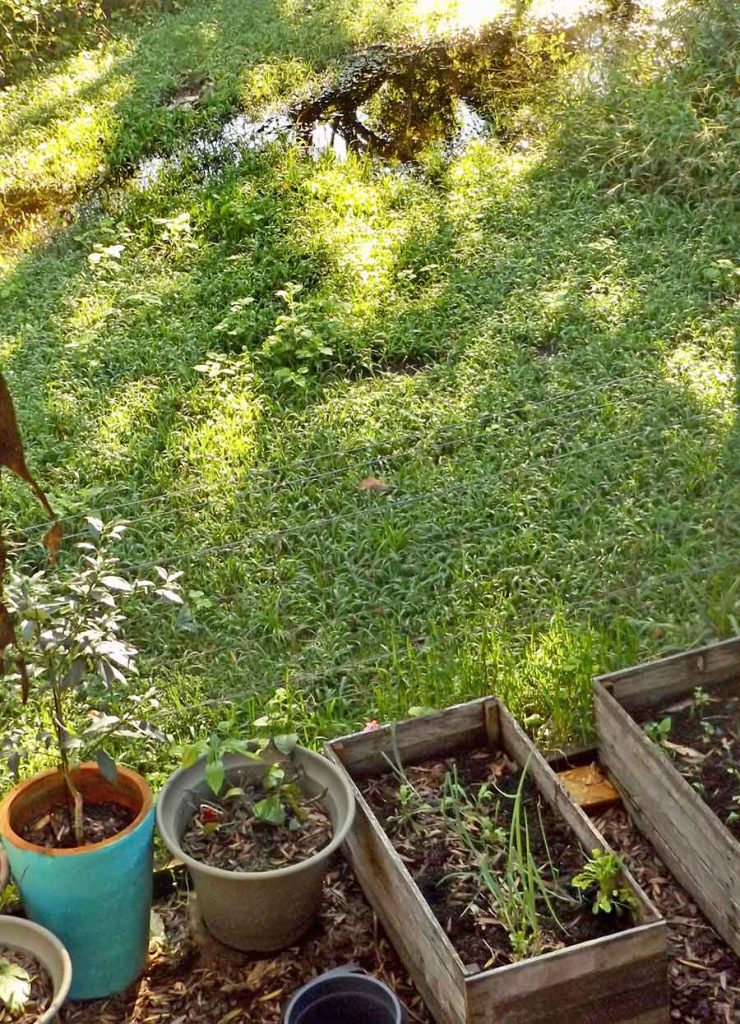
My garden is flat, and the swamp it must have once been is evidenced by the next door property, still pools of brown water. The ducks and water hens don’t mind, as they can wade and swim at ease; even the kookaburrras like to fly down and splash about.
But I realise now I ought to have raised the whole area before installing these garden beds or placing large pots down there, so bad is the waterlogging.
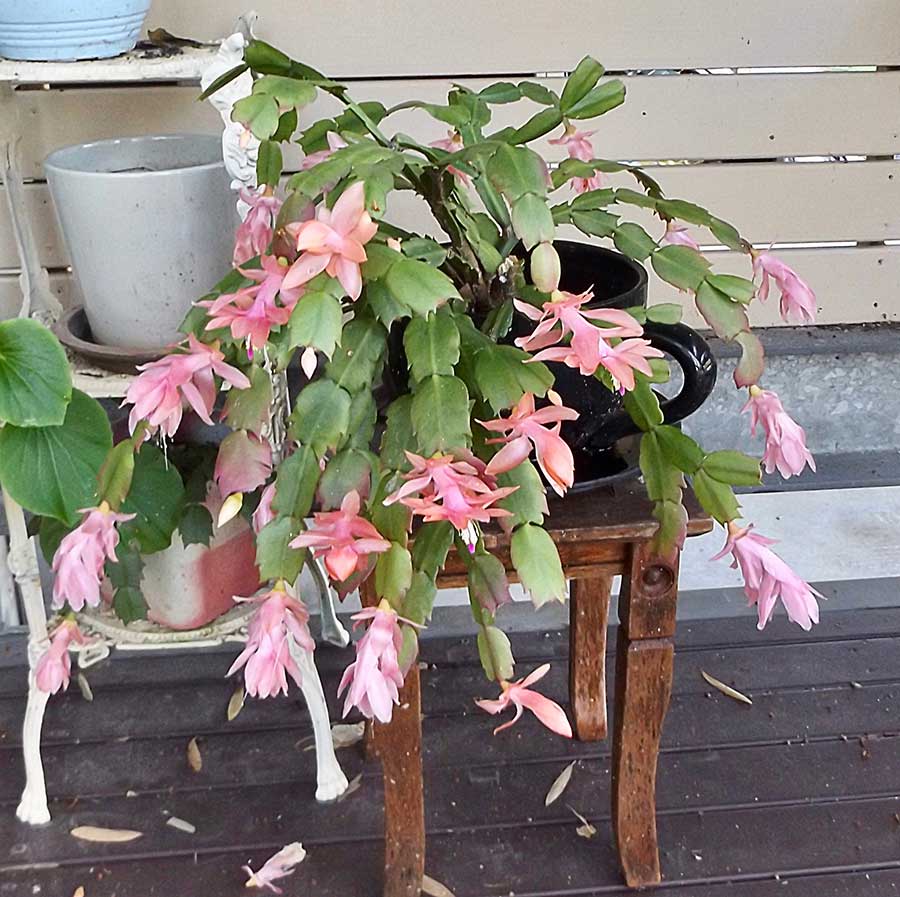
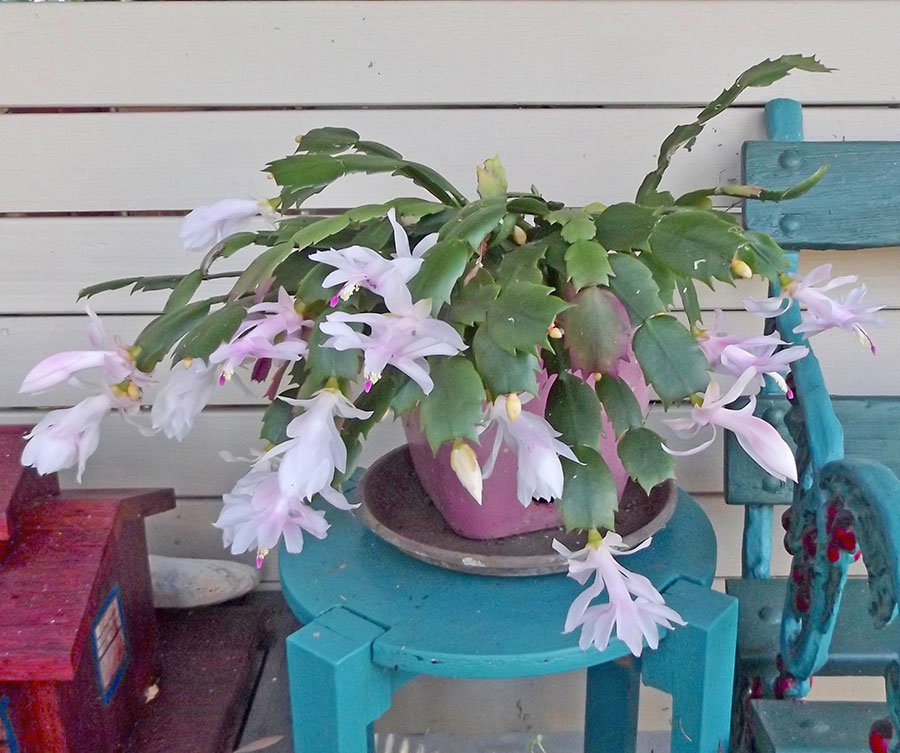
So I depend on pots up on my decks, like these surprisingly generous cacti. Formerly called Zygocactus truncata, they now bear the fabulous name of Schlumbergera truncata.
Having survived being inundated at my old house, where again the deck was their home, they have now burst forth into delicate yet showy blooms.
I have rarely seen a Sacred Kingfisher, but this gorgeously coloured bird was perched near the mangroves of the river where I live, just when I happened to walk down to see what the low tide was presenting.
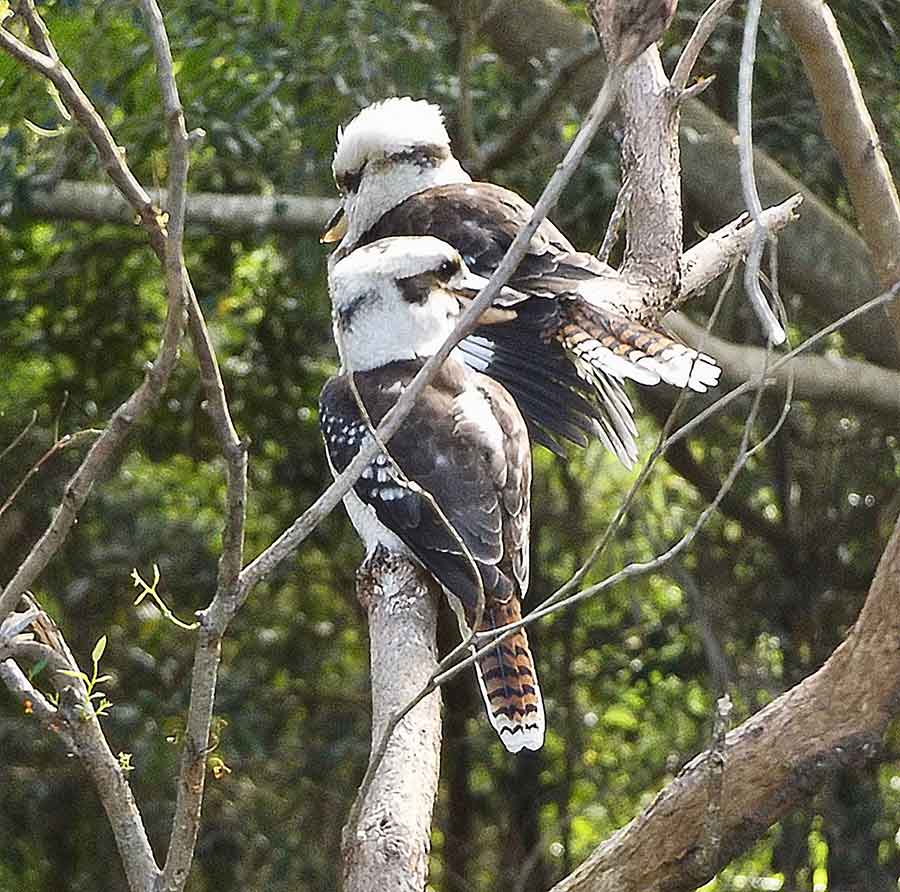
From my window I often see its cousin, the Laughing Kookaburra, the largest kingfisher in the world. This morning there had been two to welcome me home.
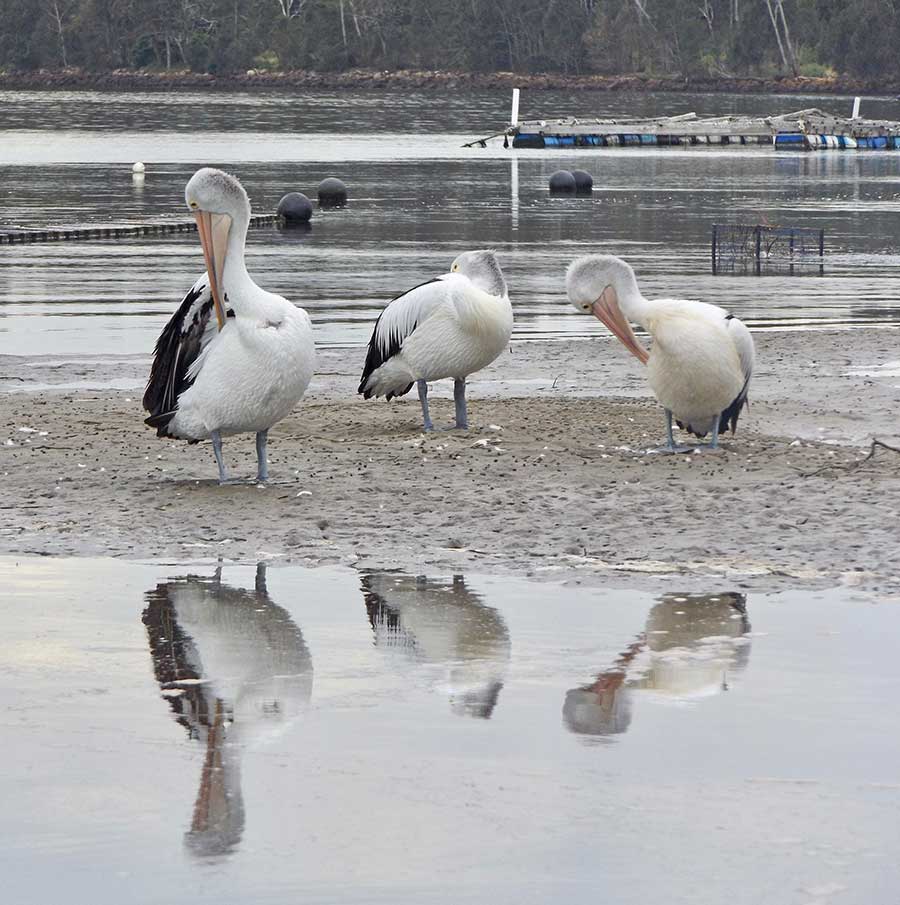
There are almost always Pelicans to be seen here, perched on oyster racks or mud banks. The degree of flexibility of their long necks is as impressive as the accuracy with which they can use their bill tips for the cleaning going on here.
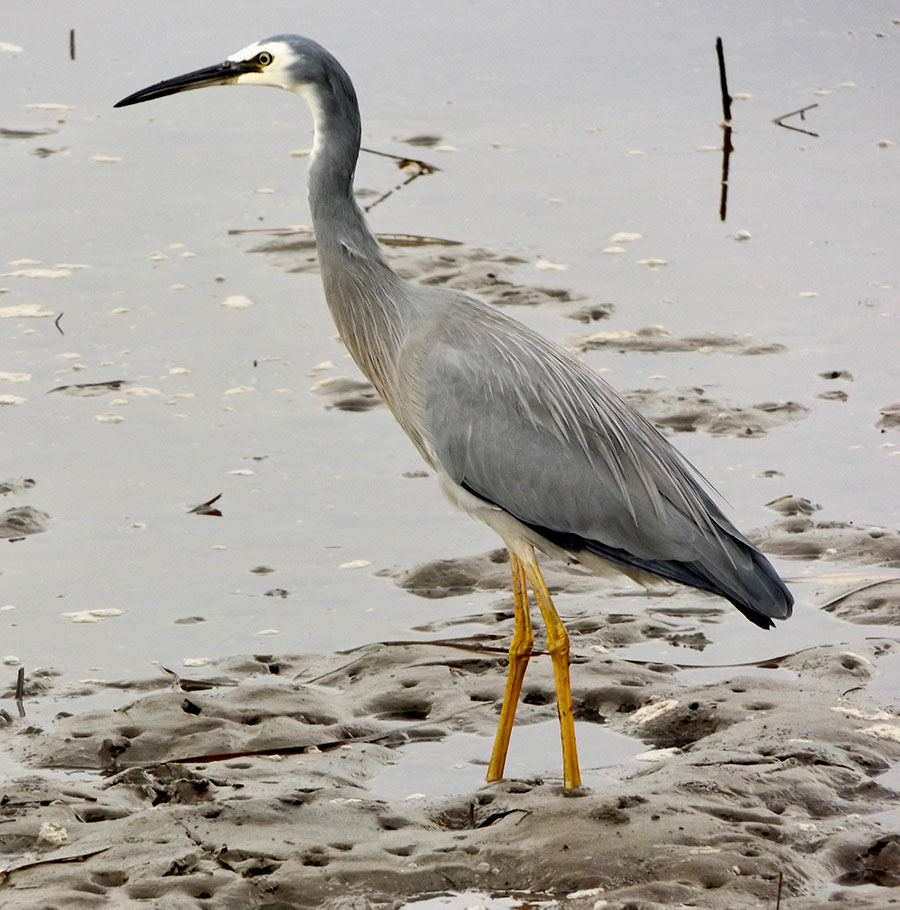
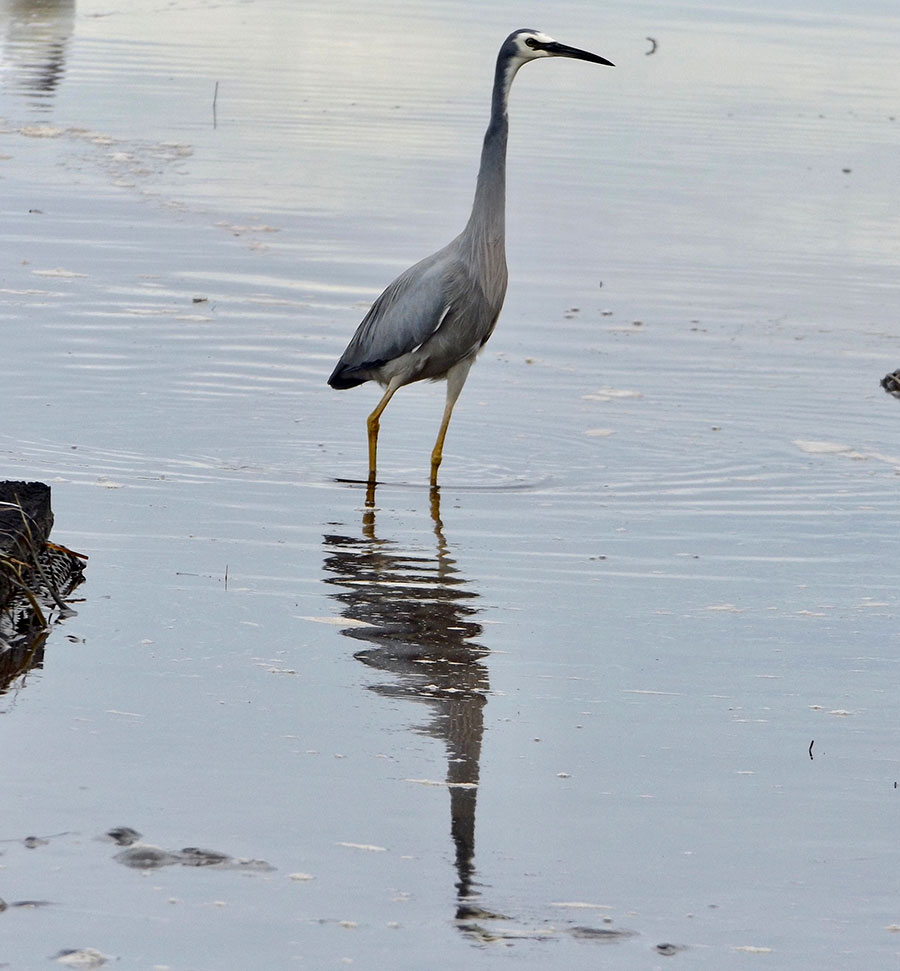
This White-faced Heron was a solitary wader through the mud and shallow water, and keen-eyed watcher. I love that the longer feathers on its back and chest are called ’nuptial plumes!’
Long-necked and long-legged, it was most elegant in its wading, double-imaged in the almost still water.
So I am back home on the coast, where the birds are perhaps no less bizarre than in the Desert Uplands.
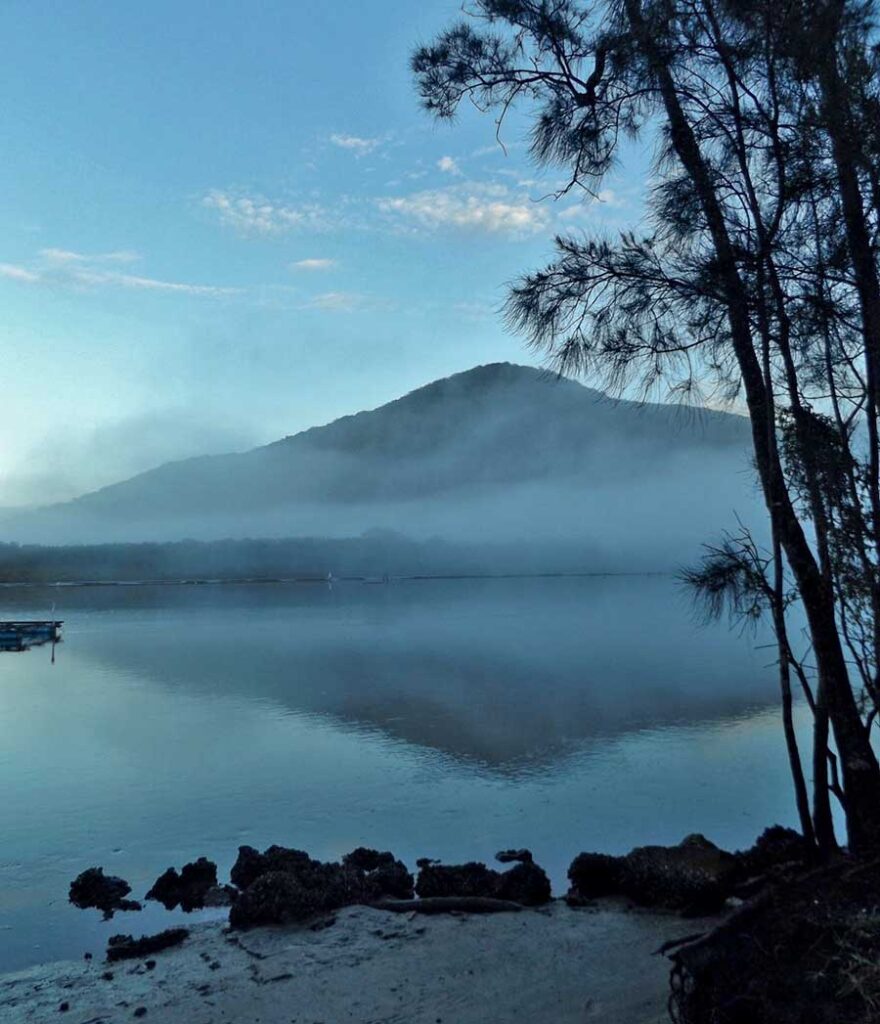
I would like to introduce everyone to my new home surroundings, and to my new mountain, which will be featured often in my blogs. It is Dooragan, or North Brother, near Laurieton. I am near both river and sea and two national parks, so I look forward to exploring and sharing sunrises, sunsets and clouds, and plants and creatures of sea, sand and rocks, mangroves, swamps and mountain forests.
Why am I here? Partly by force of nature.
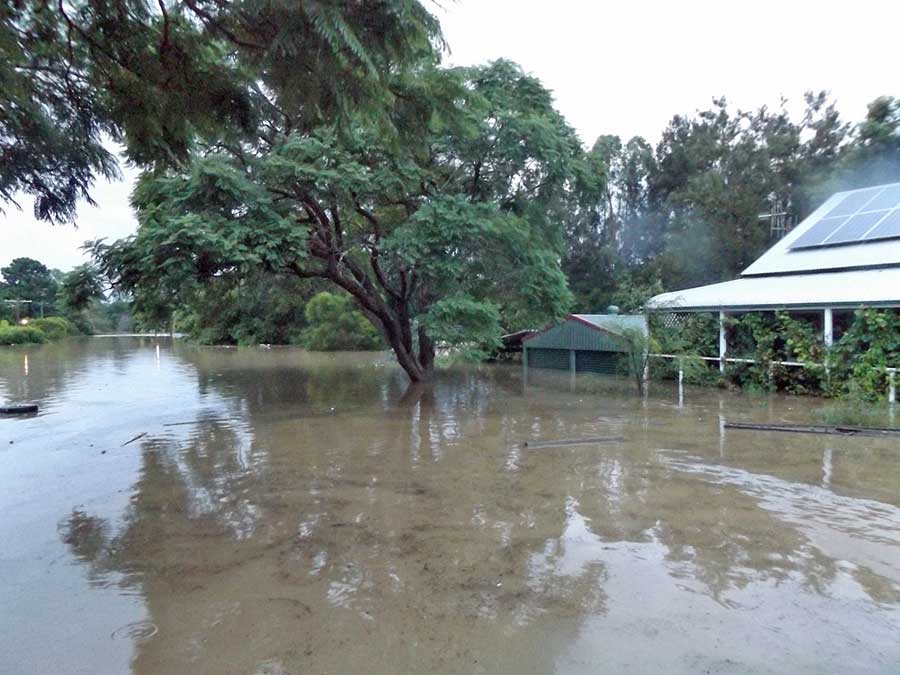
It seems like an eternity, but is about six weeks since I woke up about 6.30 a.m., swung my feet over to stand on the carpet… and found that my bed was standing in water.
Floodwater.
Was I actually awake?! How could this be real?
In water to my knees, I grabbed the torch I kept on my bedside table, and shone it about. The water certainly felt real; it looked real.
Yet I was incredulous.
This was not supposed to happen; I had been unable to get flood insurance due to the zoning, but I had not worried as my neighbouring ‘constructed wetland’ forest had been a ’90s flood mitigation measure that had worked ever since.
Wading out into the hall, my torch showed two yellow discs bobbing about in. The halved skins of a passionfruit, they’d have been in my compost bin in the kitchen… I passed a large container of corn chips that would have been in a cupboard down there…
This was real all right.
Over the night of March 19 the flooded creek/river had silently far exceeded its expected reach, snuck up the hill on which my house sat, and into my house.
At 8.30 that night I’d checked and there was water only in the lowest bottom corner of my large yard, a not unusual occurrence.
I slept soundly. There was no sound, no SMS alert or warning, no knock on the door.
While up to mattress height in the bedroom part of my house, in the lower part (two steps down) it was up to kitchen bench height, and my fridge and furniture … and compost bin contents… were floating about.
My garage, further downhill, was flooded far higher; it was full of tools and camping gear, and most precious of all, the carefully stored boxes of my own books, taped with chalk inside to absorb any moisture, placed on pallets to avoid any dampness… !! They were now just a pile of mush.
Irreplaceable. Heartbreaking.
As the SES boat took me and my few hastily grabbed possessions out, I only managed to take the above two photos.
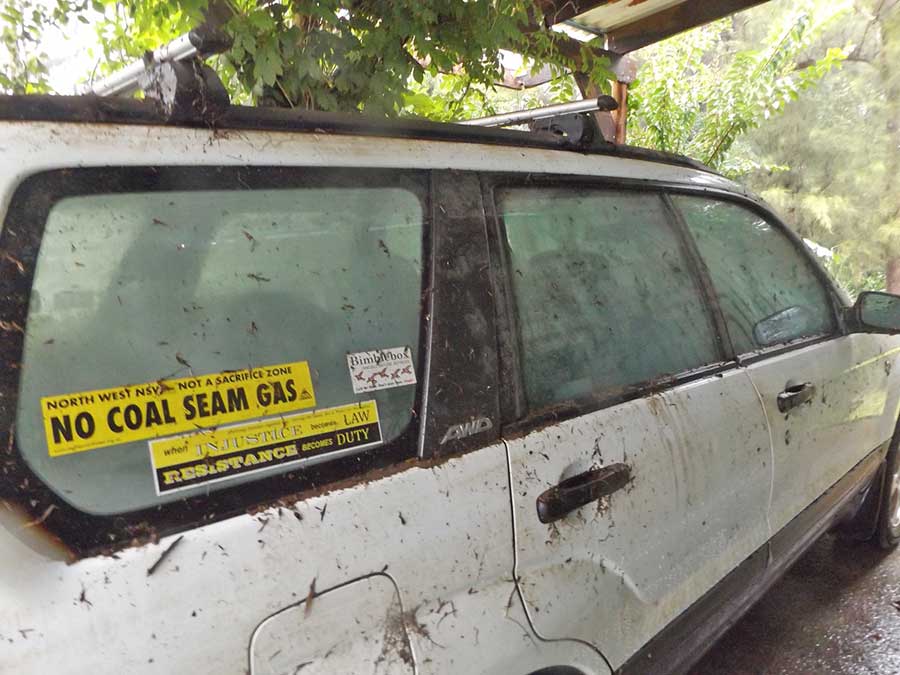
My car in the carport even lower down was under many metres of water, and next day as the water receded, it was clear it would be a write-off… as it was.
When I was allowed back in, SES volunteers helped me take out heavy items like sodden mattresses. Once family could get through other flooded roads, days later, we frantically threw out ruined items large and small, and broke apart lower swollen cupboards and furniture to get the stinking clothes and books and albums out before worse mould set in.
Fixed carpets were ripped up, large mats removed with hope they could be washed and salvaged.
My grandkids dried and separated pages and peeled off photos in the oldest family albums… again, irreplaceable.
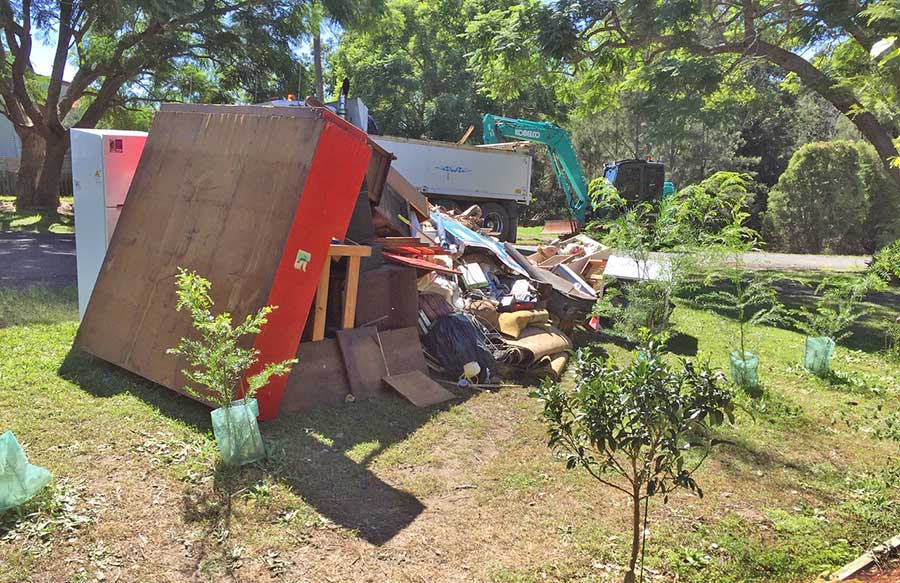
Several mountains of dumped belongings formed out the front, to be picked up by a Council excavator and loaded into trucks. Things like the fridge and washing machine looked OK, but were irretrievably ruined.
It took weeks to empty the place, but the cleaning began apace. Friends and family were wonderful; some washed many loads of linen and clothes, others washed down walls with vinegar; others washed cupboard contents deemed OK to use again, like crockery and pans; I mopped the timber floors… five moppings so far!
Many of you know of this disaster that befell me because my friend David ran a fundraiser, and while I did not look at that until weeks later, a truly humbling number of people donated to help me out. I would not have managed without those funds and I am overwhelmed with gratitude to everyone, whether they gave $10 or much more. Knowing that such kindness and emotional support was out there helped me greatly.
I have since had to pay to have done, and do myself, certain flood-damage remedial work on the house, but being mostly built of timber and timber-lined, it has come up well. Only one added-on room was plasterboard… a costly mess.
Once the underfloor foamboard insulation I’d installed was removed, the old floorboards slowly dried and uncupped. Amazing.
Chipboard does not cope with inundation well either… but the new vanity looks nice.
I’d been planning to sell and move to this smaller place on the coast. Folk had been booked to look at my lovely furnished and decorated house on the very Monday after the flood; in preparation I’d de-cluttered and put things in lower cupboards and moved much to the garage. A double punch to the guts for me; now what did I have to show or sell?
But a few weeks later, they still wanted to look at the empty and cleaned house, despite my being in process of touching up and fixing.
They made an offer; I accepted, and in a few weeks it will be theirs. Only one more trip for me back to finish painting… and say goodbye.
So now I live here. It’s small, but I write this first blog post here looking into the tops of a paperbark forest, I hear lorikeets in blossom-feeding frenzy, a goanna waddled through the carport the other day… and I have but to turn my head to see the river and that Mountain.
Silver linings indeed…
I am tired, exhausted really, but I can see they will be a comfort once I get past the shock, which has not quite hit as I have been so very busy.
Again, thanks to everyone for your support and good wishes.